On the day that India was celebrating the birthday of M.K.Gandhi, Mrs. and Mr.
Raghu and self, decided to go out on a long drive along the ECR. Our dear friend
Nilu, however, couldn’t make it due to “prior commitments”. We weren’t really clear about where to go, but we were clear that the main intent was to spend time out of the house and not inside a mall/movie hall.
In October 2007, while returning from Vaitheeswaran Kovil by car, I had noticed a board near Kalpakkam that talked about the presence of a Dutch Fort. Since I have a mild attraction to archaeological monuments, I have been thinking about visiting this place ever since.
So I broached this venue to Raghu and he accepted it with no qualms. After working out the logistics, we decided to head out by 2.30 PM and believe it or not, we actually left by 2.50!
After we started from home, we first headed out to my usual petrol bunk at Adyar to fill in fuel. In what turned out to be a harbinger for the rest of the day, the bunk was closed. We moved on to another bunk nearby, filled up the fuel and proceeded with the trip.
We had a pretty decent drive, notwithstanding the efforts of an SUV to run over us a few kilometers after Mahabs. We finally reached Kalpakkam. But there was no sign of the board that I saw last year. We stopped over at a couple of places to enquire about the fort. And no one actually knew about it. Finally there was a cop buying some stuff at a shop and I approached him. He finally understood what I was looking for and gave me the directions to the “koattai saar. British kaaran kaalathula kattinadhu”. He obviously lived with the maxim that all Caucasians are British theory and I had no patience to try and correct him.
We followed his directions and after passing through the Kalpakkam Township, we finally spotted a rather small board that said “Dutch Fort and Cemetery” and had an arrow pointing to the left. We looked to the left and lo behold, there was this long wall which had shed its plastering and was proudly exposing its bricks.
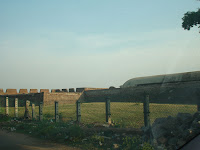
We turned left and took the road alongside this wall, only to find a longer wall exhibiting a similar constitution. We then reached the entrance.
After having reached the entrance, we were worried if there was some other way to go inside the Fort. The reason was the presence of a tall iron gate that was locked. There was a small gap in the fencing (by design) and there was something like a path that led to another of the walls I mentioned before. This wall however was different, because it had the semblance of a formal entrance in the form of a gate capped by a minar like structure and there were 2 canons on either side of this gate.
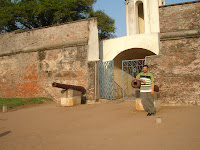
One thing that was glaringly visible was the ABSENCE of people. In a country that’s known for its density of population, it was scary to see nobody at a
monument where some kind of history exists. There were no visitors. There were no officials. There were no sign boards other than the one at the main gate that said that this was a protected monument. The only way we knew that we were not trespassing into someone’s private property was the assurance from a local woman who looked like the caretaker of the place.
Even as we stepped inside these walls, I was still alive to the possibility of seeing some relics. Some more cannons. Probably a spot where some major fight took place. The place where they stored their ammunition. The place where chief’s office was. The place where they had their flag post. And all of this explained with lot of signboards.
But all I could see inside was a big piece of land with growth of wild grass and a few trees in the middle. There was this muddy path which was headed towards a few structures which were in a dilapidated condition. You just cannot say what these structures were meant for, by looking at it.

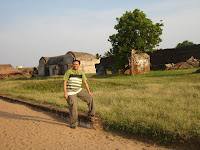
The caretaker lady pointed us to an area which was basically the Cemetery mentioned in the board we had seen 10 minutes ago. We went inside and came out in, probably, 39 seconds. Then, we headed inside the grounds I mentioned earlier. We went inside one of these structures and found them to be just rooms; rooms with windows and arched ceilings. The area we went to appeared to have walls that were plastered with modern day cement. Obviously some amount of restoration has happened, but then, the charm of the old building was lost. There were more ruins of course, but we were in a deep state of bulb to try and venture there.
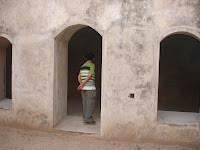
We took the mandatory pictures of our presence in that place and made a hurried exit.

The visit to this Fort would probably rank in the top 10 bulbs I’ve had in terms of expecting great things and getting sheer nonsense. In fact, it is high time the authorities call it the “Dutch Cemetery and an extended ruined compound wall around it”.
And thinking about the Fort now, it is clear why the Dutch never ruled us. Going by the reports in the article related to the excavations done here, this Fort seemed to have been some sort of a glorified club/watering-hole for the expatriates of those times. In fact, the fight between the Dutch and the Brits must have come up due to suspected foul play during a Tiger-Goat-game! Or else, this Fort was just a warehouse for the Dutch traders to stock their goods. And probably they sabotaged their stock to take the insurance benefit. Unfortunately, they may have insured with some Brits who found out the truth and took over the Fort/Warehouse.
Anyways, after we came out, we decided to head to Mahabs with the knowledge and assurance of being able to see ancient architecture. We stopped over for a quick cup of coffee that extended itself into a plate of vegetable bonda. We set out to the Shore Temple.
Unfortunately, that day turned out to be “Kaanum Eid” – at least that’s what I am calling it since I don’t know the technical details for that festival. You see, we Hindus in Tamil Nadu have this event called “Kaanum Pongal”. This is the day after all other Pongal days and families make it a point to visit important tourist spots. I called this Gandhi Jayanthi day as “Kaanum Eid” because there was a lot of crowd around the Shore Temple and most of these were Muslims. Since the previous day was Eid, I created this event called “Kaanum Eid” to equate my Muslim brethren with the Hindus.
Anyways, by the time we reached the Shore Temple, the authorities refused entry since the stipulated visiting hours were getting over in 5 minutes. We then braved the crowd and headed to the beach just for the heck of it. We spent some time in the Mahabs Promenade (c’mon there were merry-go-rounds, bonsai giant-wheels, air-rifles to shoot balloons, lot of small shops selling souvenirs and hell even an apology of a LifeGuard’s outpost) and after Mrs. and Mr.
Raghucompleted their souvenir purchases, we walked back to our car.
Even as I was driving the car back home, I got a call from my team-member at onsite about a serious problem that had come up.
Raghu being the great guy he is, he quickly took over the steering wheel and drove us back, while I chalked out some plan with my team-member.
The only good part of the day came after we reached home. We had decided to have dinner at Eden and as is always the case with them, we were not disappointed. The really good dinner helped round off what was otherwise a day filled with one bulb after another.
Note: The Dutch Fort and Cemetery is listed at
# 66 in ASI’s list of monuments in Tamil Nadu.


